Tildekit
Memory for coding agents, in plain text: one folder of rules, skills and project notes that Claude Code, Codex and Cursor read when a session starts.
- Product, Design & Development
- Memory for coding agents
- 2026
- TypeScript
- Node.js
- Astro
- Claude
- Git
The brief
Challenge
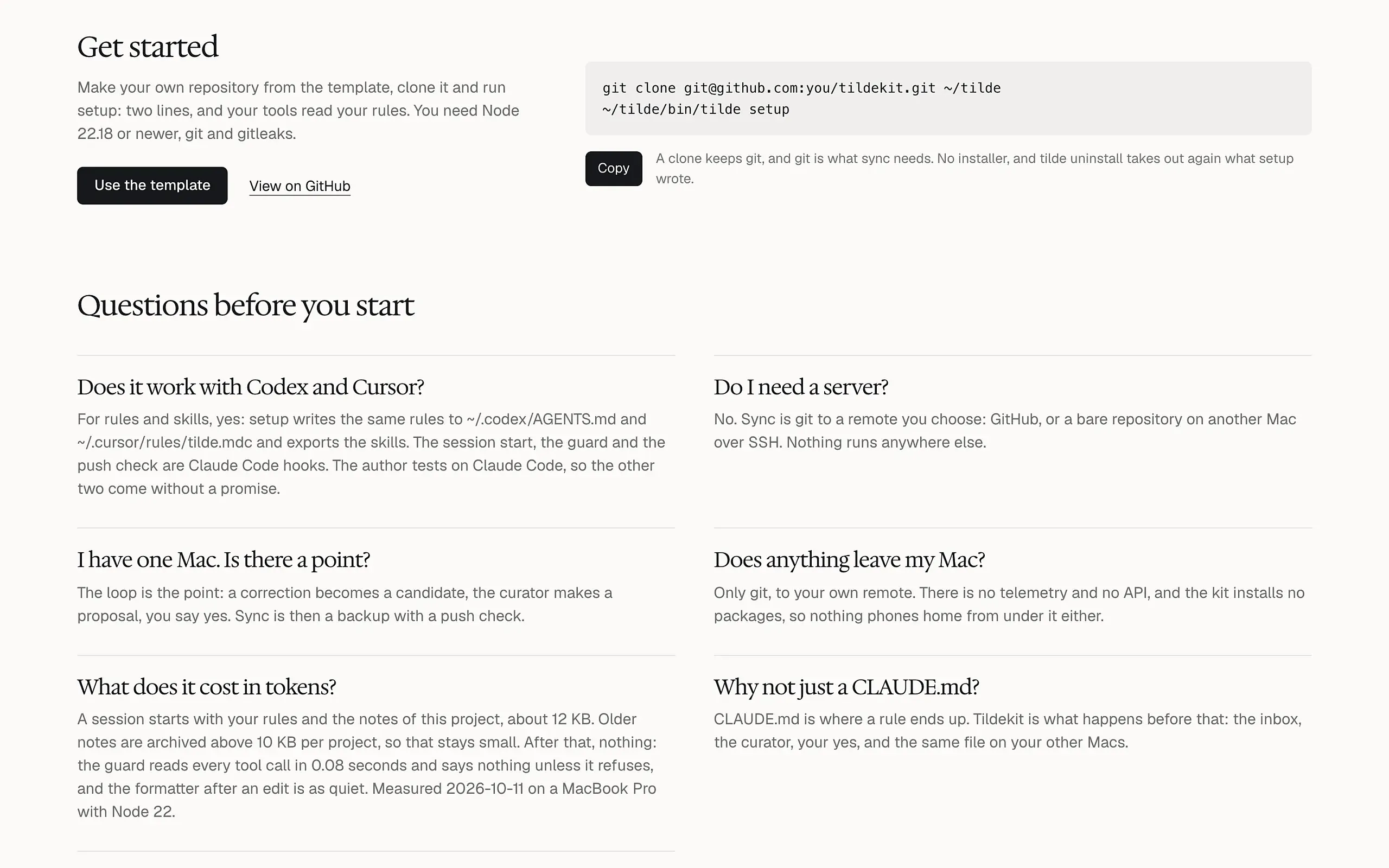
I use Claude Code, Codex and Cursor on three Macs, for work and for my own projects. Each session starts knowing nothing about the previous one, or about what I told the other two, so switching tools or Macs meant explaining the project again.
Approach
One folder of plain text in git: rules, skills and a file per project, which every tool reads when a session starts. A small engine in TypeScript adds the hooks. A correction becomes a line in an inbox, the curator turns it into a proposal, and rules and code only reach my other Macs after my yes.
Outcome
Public since 12 October 2026 as a GitHub template under the MIT licence, with its own site at tildekit.dev. I use it every day, on three Macs.
The site
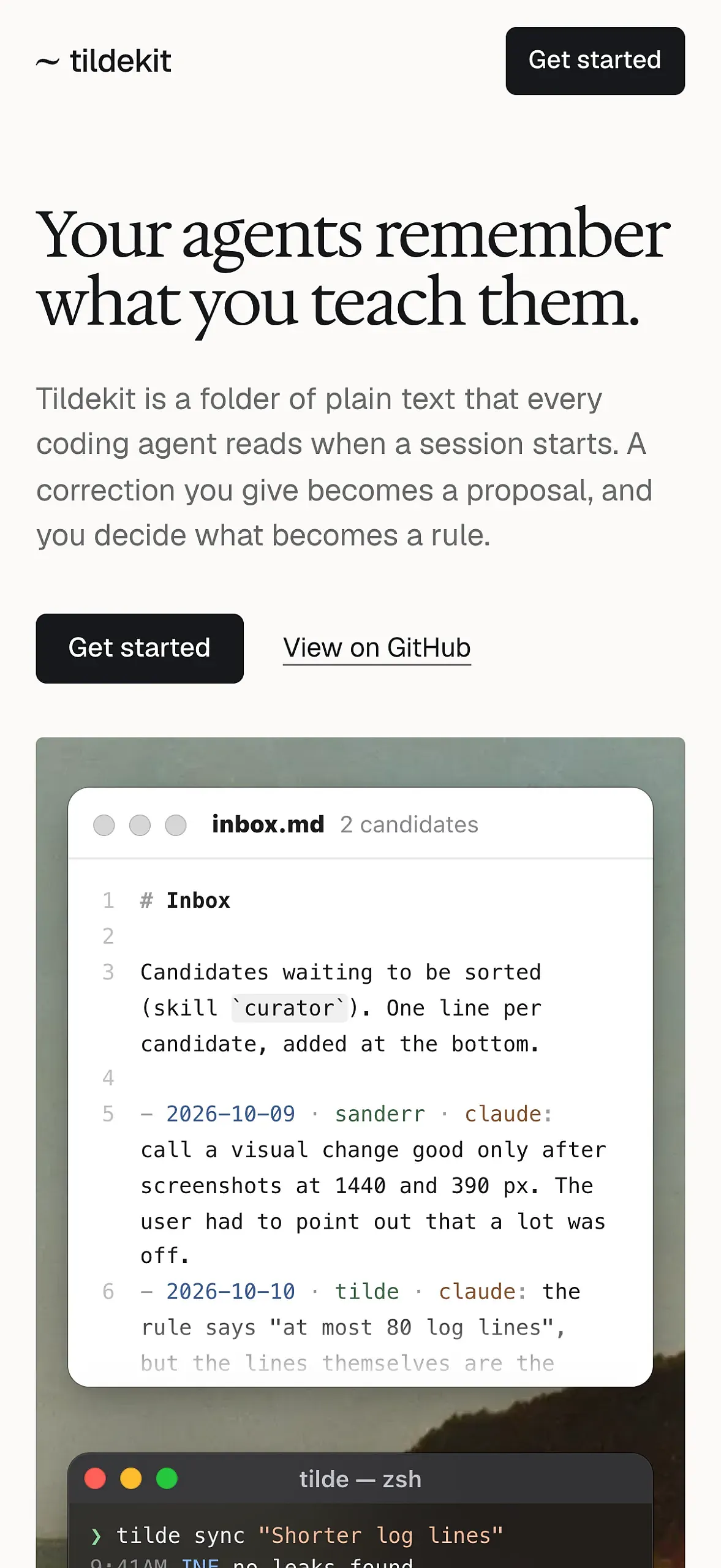
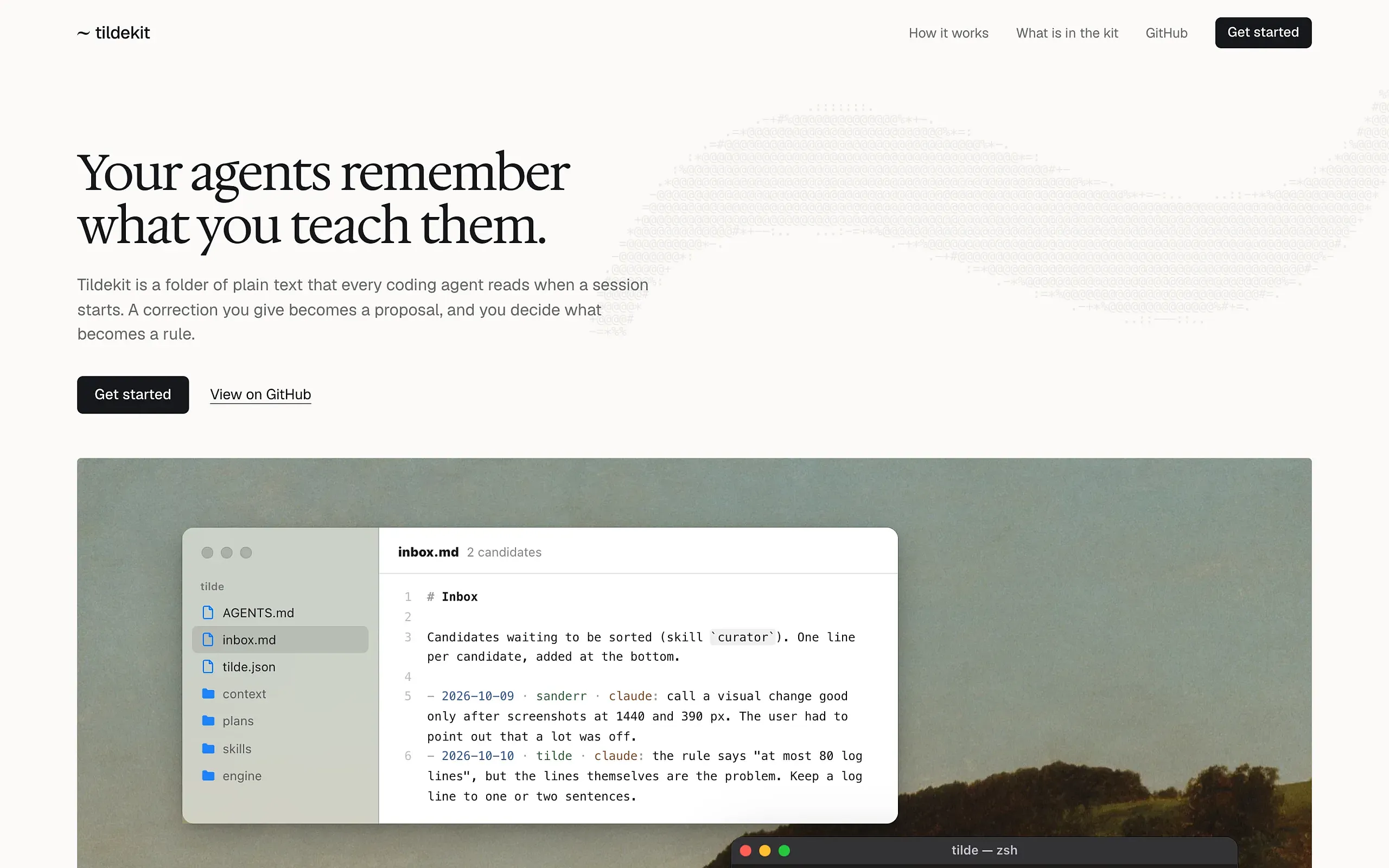
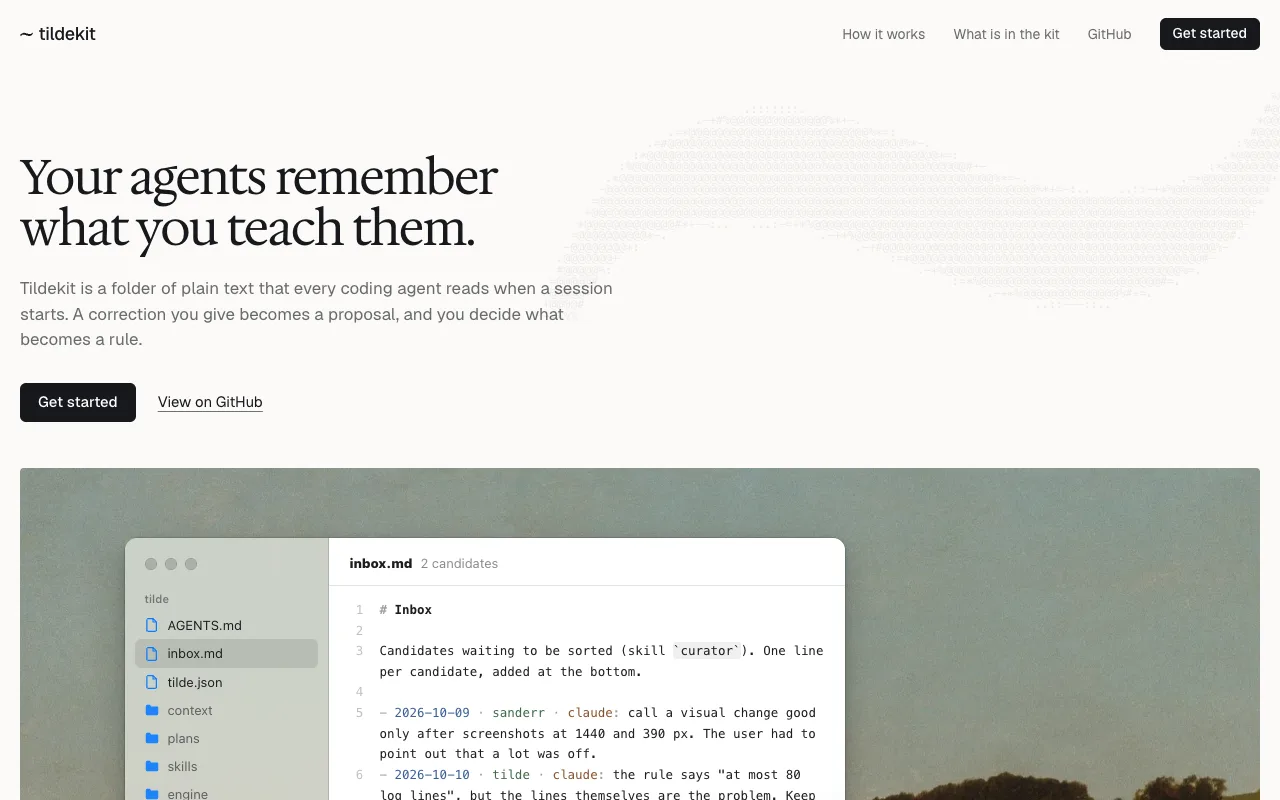
The site says what it does in one line and then shows it: a home of plain-text files in windows you can drag, with the inbox and a sync waiting for a yes.
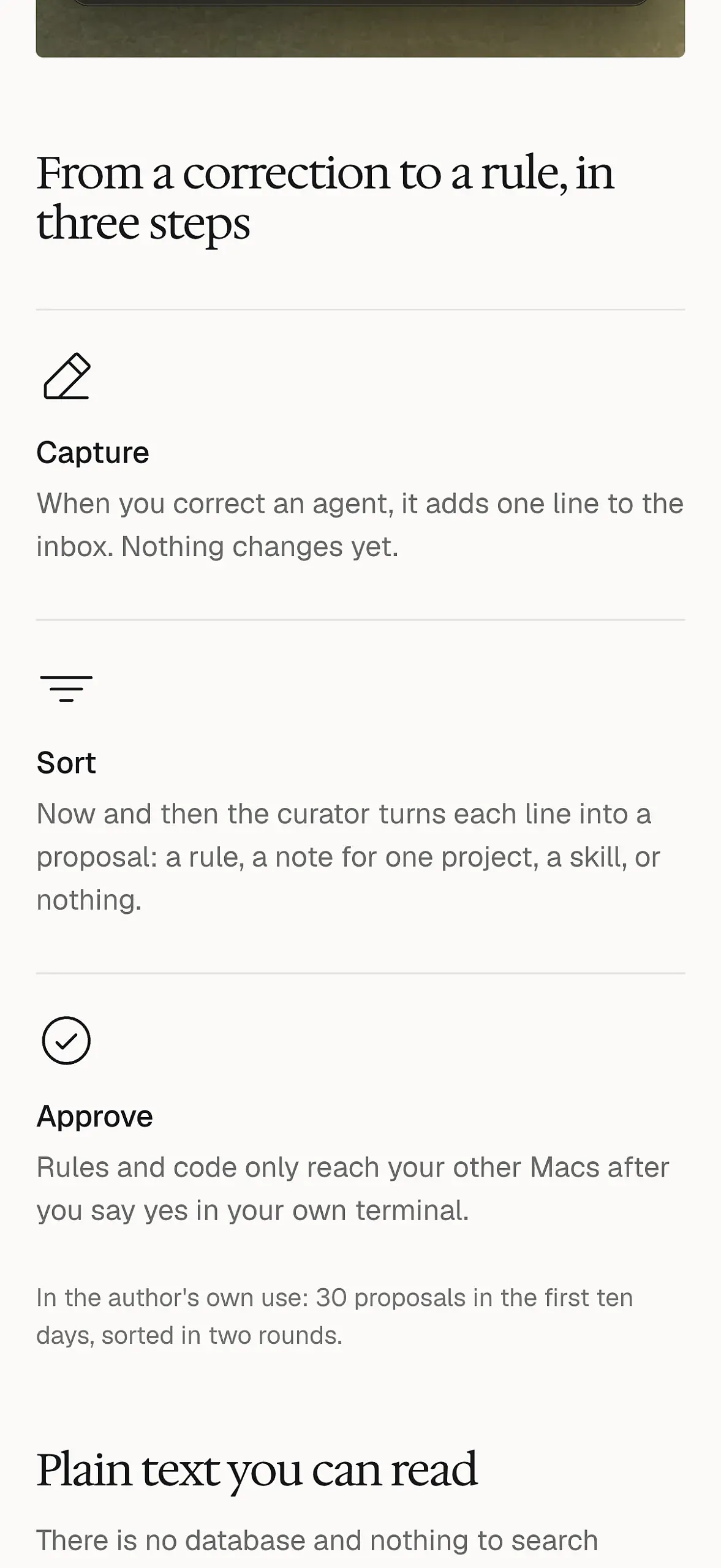
From correction to rule
Capture, sort, approve. A correction is only a line in the inbox until the curator makes it a proposal and I say yes, so an agent never changes its own rules.
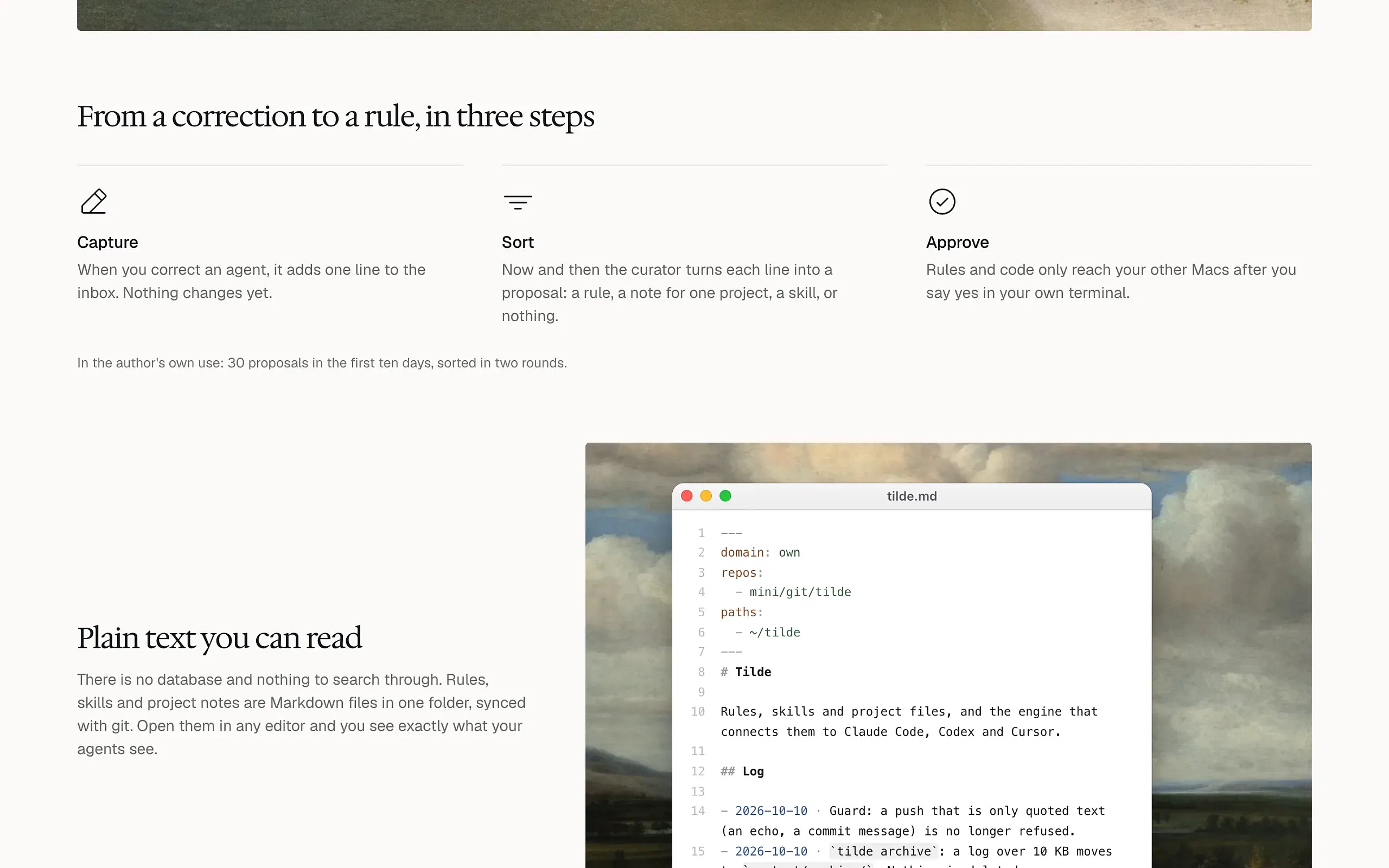
In my own use
- 30
- 33
- 0
- 12 KB
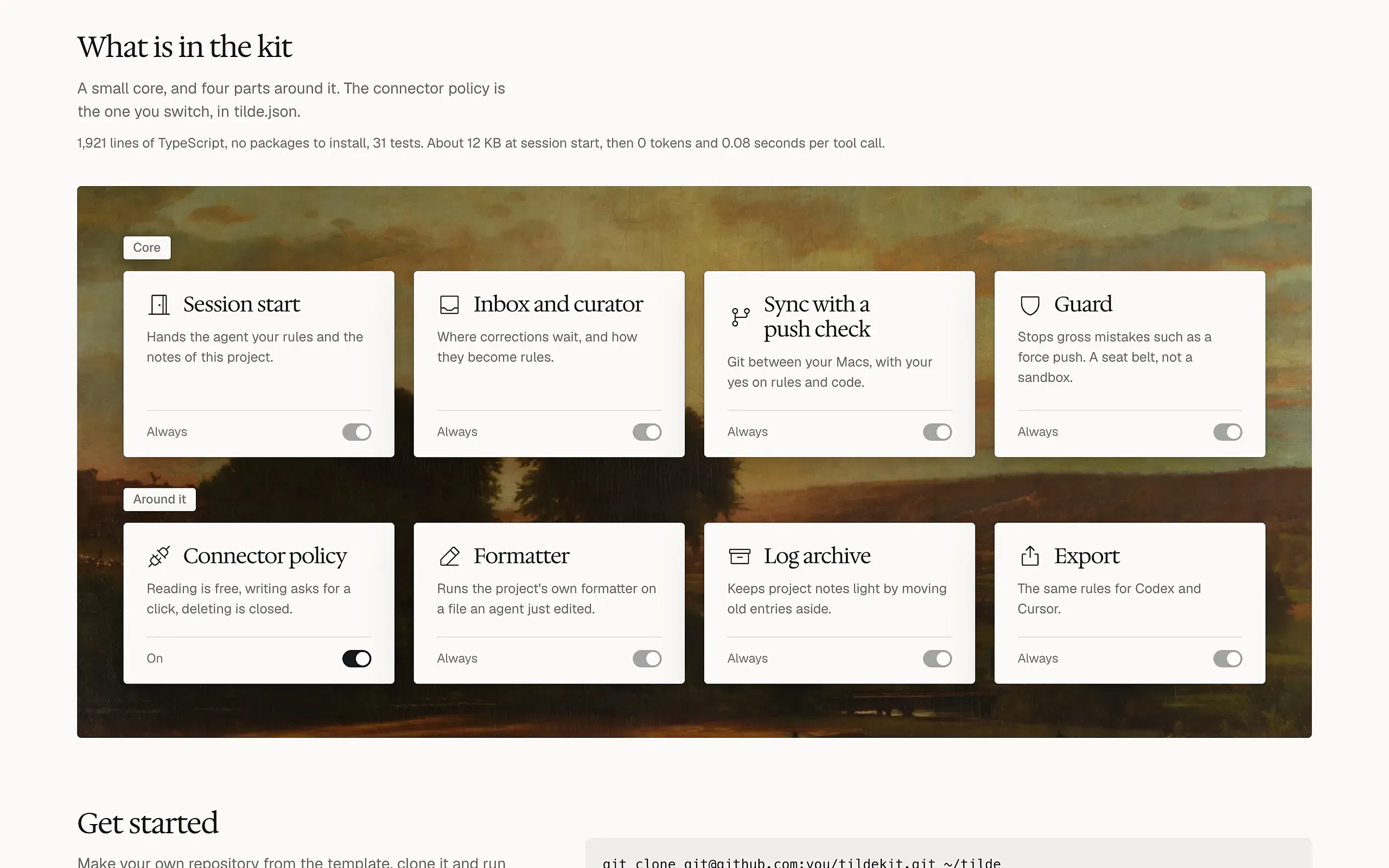
What is in the kit
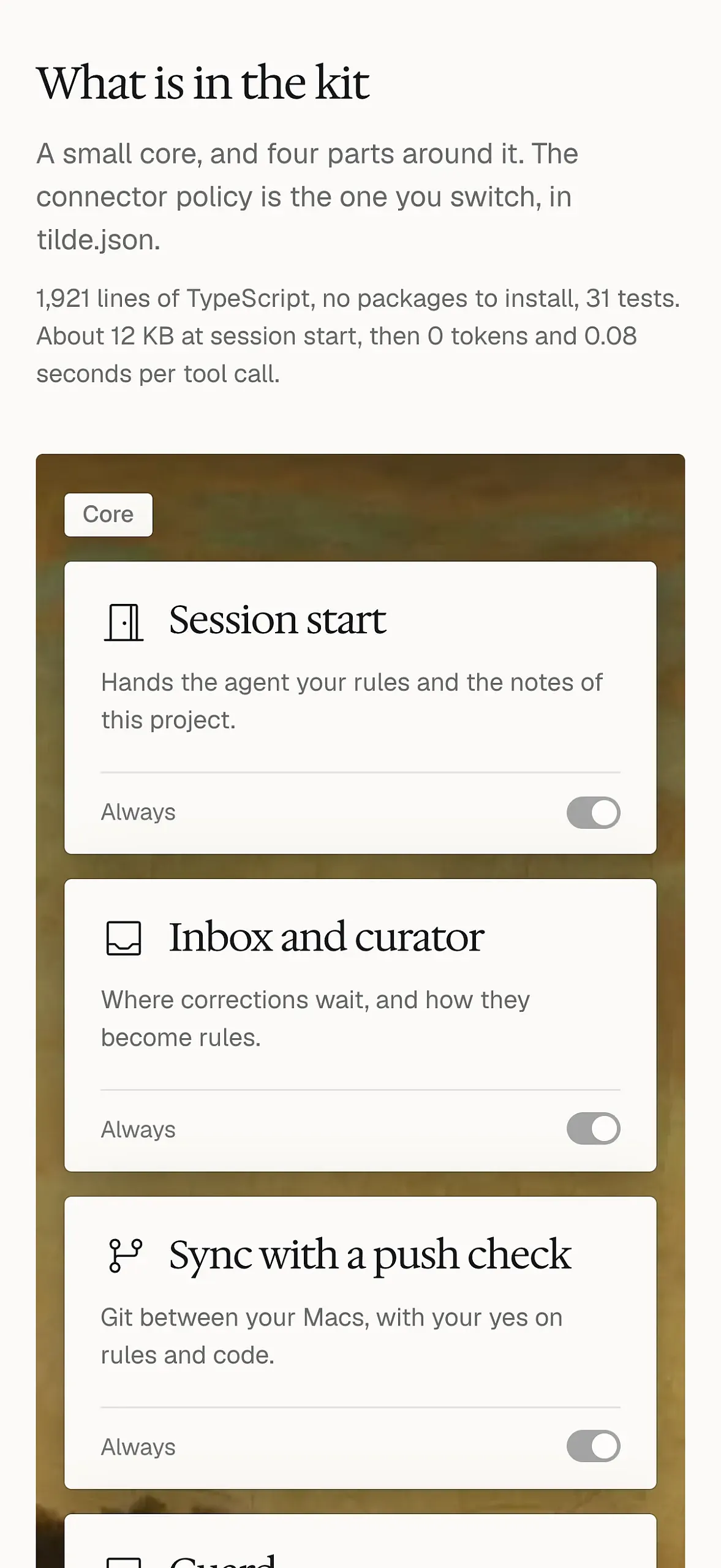
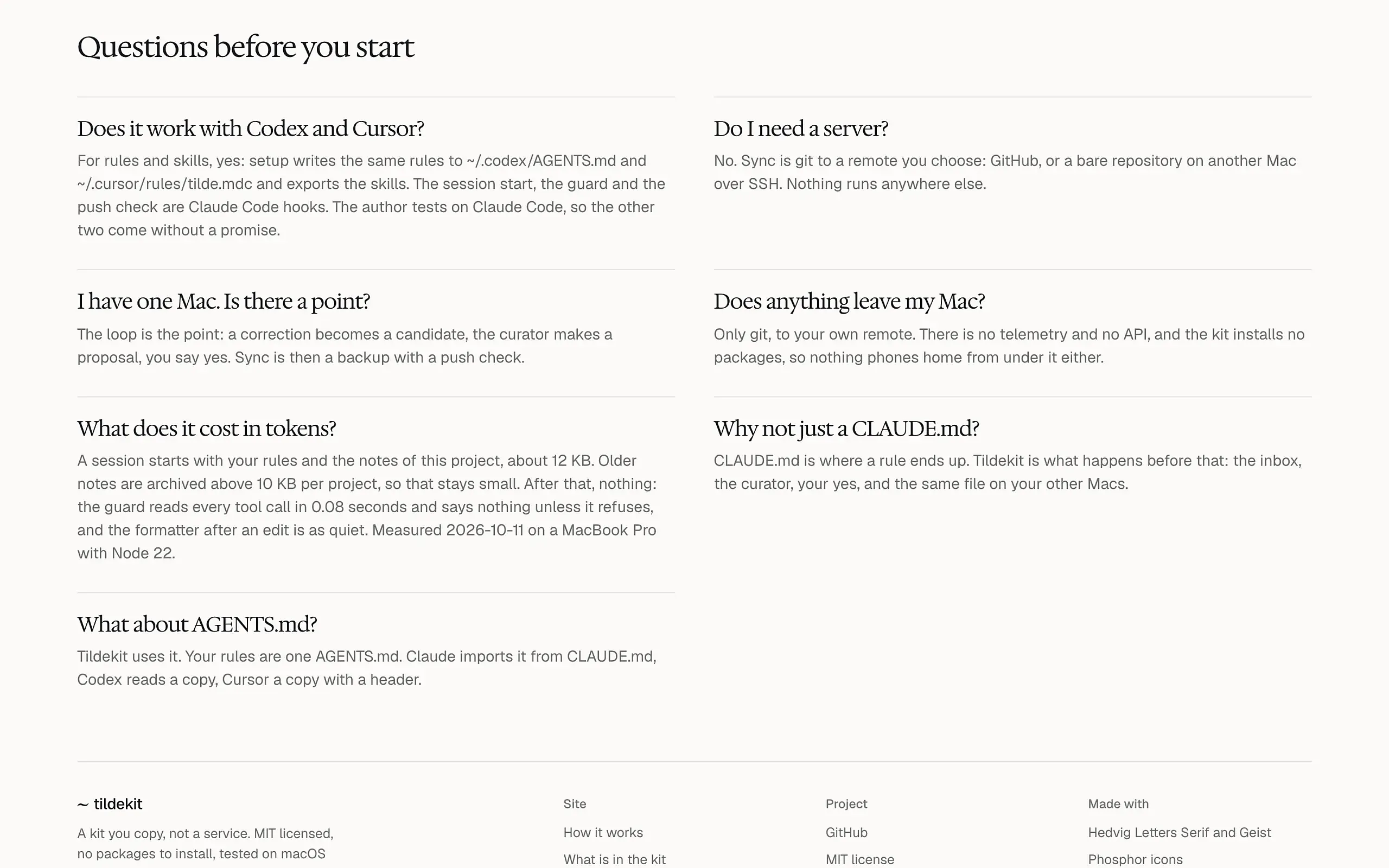
A small core of session start, inbox, sync and guard, and four parts around it. The connector policy is the one you switch: reading is free, writing asks for a click, deleting is closed.
What it is not
- Not a sandbox: the guard stops gross mistakes such as a force push, as a seat belt
- Not a service: nothing is hosted and nothing phones home, sync is git to a remote you choose
- Not supported: it is my own setup, tested on macOS with Claude Code
On a phone
The same page in one column, from the opening line to the steps and the parts of the kit.