
How I build with Next.js
I am a developer in Leeuwarden and build products of my own with Next.js, React and TypeScript: from a first idea to something that is live, the frontend and the backend with it. This is how I go about it.
- Next.js
- Leeuwarden, NL
- 4 projects
What I look after
What I do again with every product.
-
From idea to live
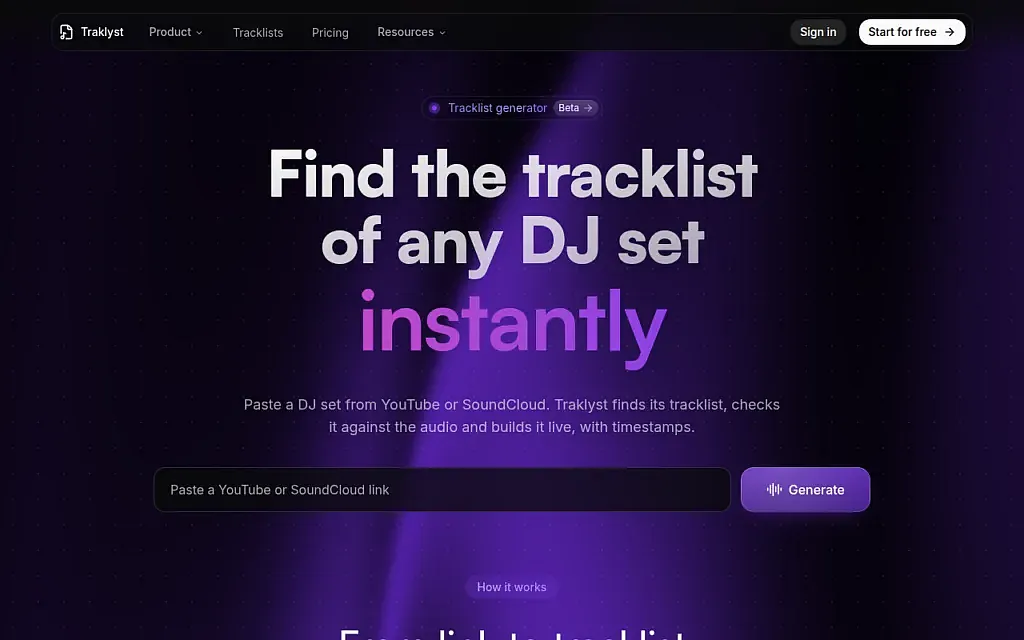
Traklyst began as a side project and grew into a product with its own recognition pipeline, accounts and paid plans. I designed and built it, and host it myself.
-
A frontend with a system
React and TypeScript, with Tailwind and shadcn/ui as the base for an interface that stays consistent while the product grows.
-
The backend too
API routes, a database in PostgreSQL or Supabase, accounts and payments. For Traklyst and UntitledOne I built both sides.
-
Headless for WordPress
A fast frontend in Next.js, while the content and the orders stay in WordPress. That is how the French webshop Oursondenaissance is set up.
-
Easy to find
Server-side rendering, clean metadata and a product feed where it is needed. For Oursondenaissance, French SEO and a feed for Google Merchant were part of the build.
-
Tested with users
UntitledOne was built on interviews, a survey and usability tests. What came out of those decided what went into the first version.
How does Traklyst work?
Traklyst is the largest thing I have built in Next.js. You paste a link to a DJ set on YouTube or SoundCloud and the tracklist is built on the page while the scan runs, with a timestamp for every track.
Each scan follows the same steps. First Traklyst collects what has already been published about the set: the description, the comments and community tracklists. Then it analyses the recording itself. A track is only added when two independent sources agree. A part nobody can name stays in the list as ID, instead of being filled in with a guess.
Around it sits what a product needs: accounts, plans and billing, and a public library in which every scanned set gets a page of its own. In early October 2026 it held 2,954 identified tracks, 81% of them confirmed by the audio.
- 2,954
- 81%
- 2
Built with Next.js
Products of my own, a graduation project and a webshop.
-
Traklyst Next.js · TypeScript · React · Tailwind · shadcn/ui
-
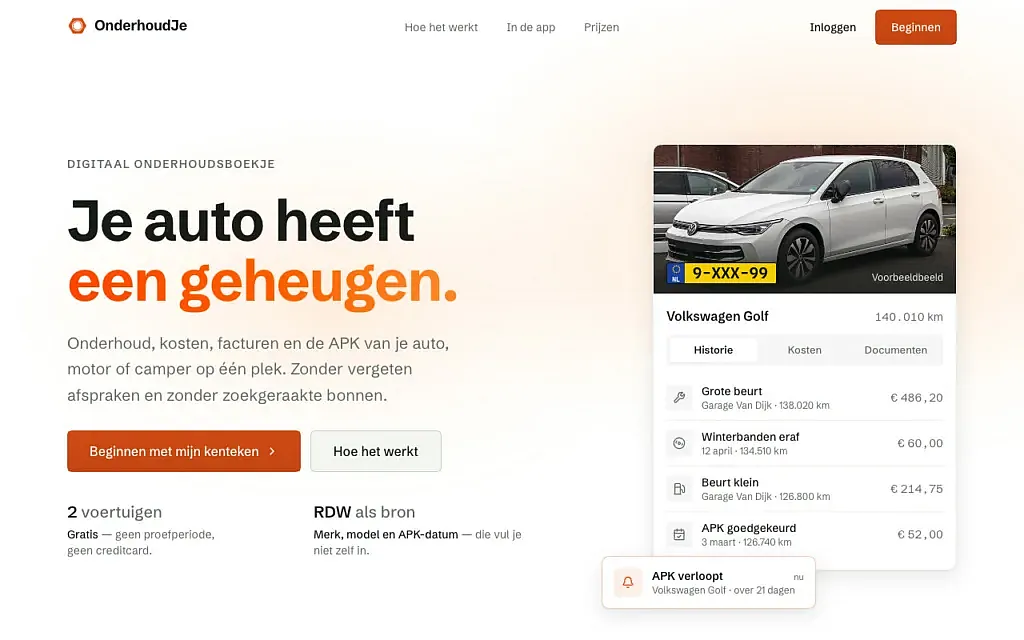
OnderhoudJe Expo · React Native · Next.js · TypeScript · Node.js · PostgreSQL · Docker
-
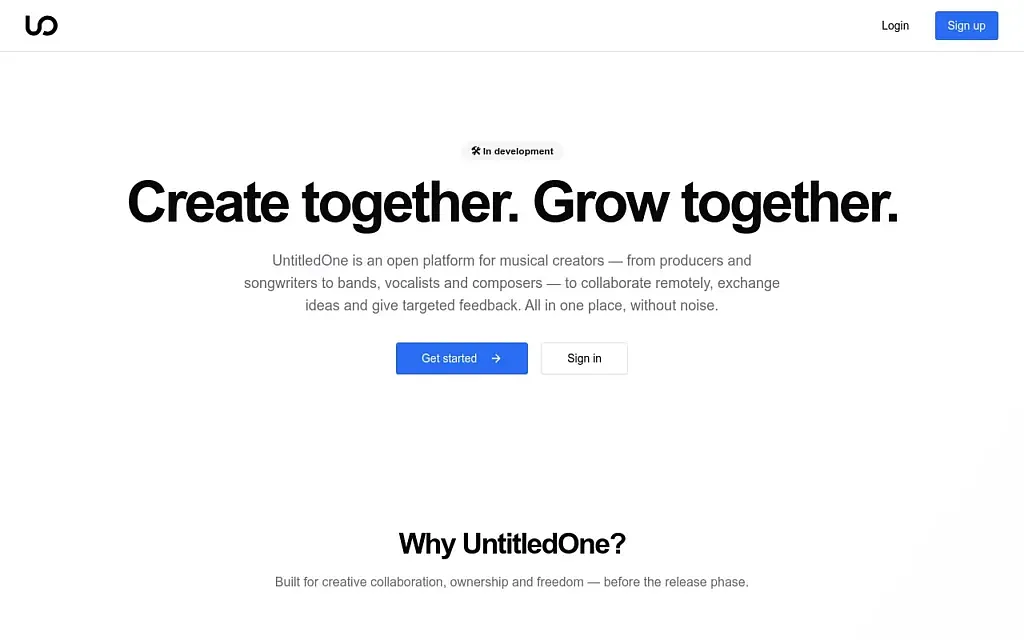
UntitledOne Next.js · React · TypeScript · Tailwind · shadcn/ui
-
Oursondenaissance Next.js · Node.js · React · shadcn/ui · Tailwind · TypeScript

- TypeScript
- React
- Tailwind
- shadcn/ui
- Node.js
- Expo
- React Native
- PostgreSQL
- Docker
How I work
Clear decisions, short loops and something real to react to.
-
Find the actual need
Before choosing a stack, I clarify the goal, the user and the smallest version worth building.
-
Build the right amount
I choose the simplest stack that fits, then move quickly into something real enough to test and improve.
-
Refine the experience
Responsive behaviour, subtle motion, accessible choices, readable code and a clear CMS turn a working build into a finished product.
Questions
What I often hear about it.
-
I choose the simplest stack that fits. If it is about content someone manages themselves, WordPress is often enough. If it is a product with accounts, logic of its own or a lot of interaction, Next.js fits better.
-
Yes. WordPress then stays the admin and Next.js becomes the front. Oursondenaissance works that way, with WooCommerce behind it.
-
Yes. For Traklyst and UntitledOne I built the interface as well as the database, the accounts and the rest of the server side.
-
Of UntitledOne it can: it is open source under the MIT licence.
Which stack when
I choose the simplest one that fits.
| Stack | When |
|---|---|
| WordPress | Content someone manages themselves: a site, a portfolio, a blog. |
| Expo | Something you carry with you and that has to remind you: an app. |
| Next.js | A product with accounts, logic of its own or a lot of interaction. |
| Laravel | An application with users, permissions and a lot of data. |